

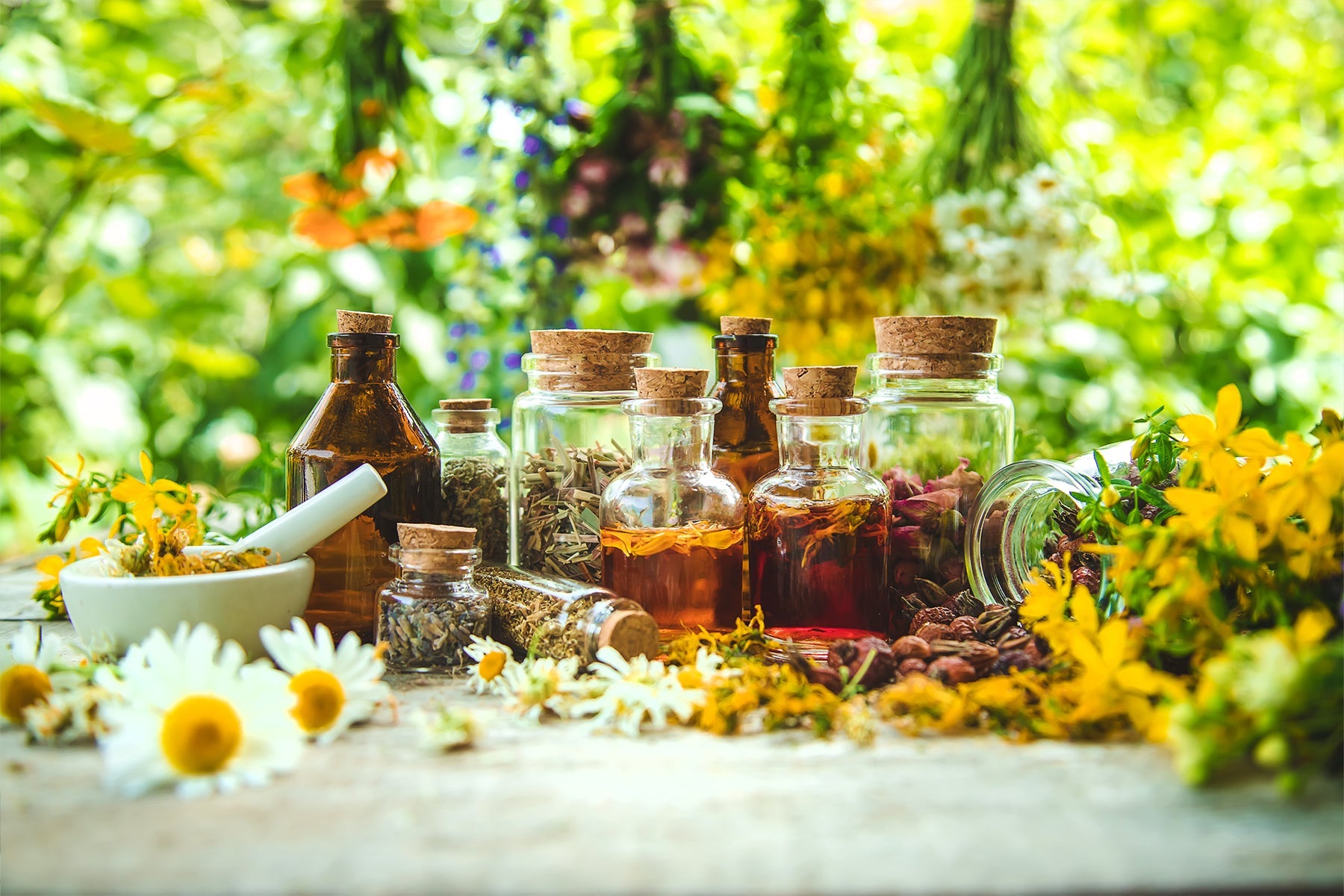
Do You Know All That's Within Nature's Medicine Cabinet?
The $532 billion global cosmetics industry has been borrowing—some might say appropriating—formulas from nature since long before laboratories existed. At Sankofa Collective, we believe in honoring that legacy by connecting consumers with Black-owned businesses that understand the power of plant-based ingredients. Let's explore what our ancestors knew instinctively: the best personal care products often grow right out of the ground.
Aloe Vera: The Ancient Burn Ward
Did you know that Cleopatra credited aloe vera as her secret to beautiful skin? This succulent plant, which grows wild in arid climates, has been used for over 6,000 years to treat burns, wounds, and skin irritation. Today, aloe appears in everything from sunburn gels to face moisturizers, often listed as "aloe barbadensis leaf juice." The commercial beauty industry extracts the same soothing polysaccharides and enzymes that traditional healers accessed by simply breaking open a leaf. The difference? You're now paying a premium for what once grew freely.
Tea Tree Oil: Australia's Antiseptic
Indigenous Australians crushed tea tree leaves to treat cuts, infections, and skin conditions for thousands of years. Did you know that during World War II, Australian soldiers carried tea tree oil in their first aid kits as a standard-issue antiseptic? Fast forward to today, and this powerful antimicrobial appears in acne treatments, dandruff shampoos, and hand sanitizers. The active compounds—terpinen-4-ol and alpha-terpineol—are the same whether extracted in a lab or released from crushed leaves on a hiking trail.
Shea Butter: Africa's Liquid Gold
Did you know that shea trees grow wild across West Africa and that women have been harvesting their nuts to create moisturizing butter for centuries? This "women's gold" provided economic independence for African women long before fair trade became a buzzword. Shea butter's rich concentration of vitamins A, E, and F, along with essential fatty acids, makes it an intensive moisturizer for skin and hair. Today, you'll find it in countless products across the beauty industry. Yet the African women whose traditional knowledge identified its value often receive minimal compensation for this wisdom that has generated billions in global revenue.
Willow Bark: The Original Aspirin
Ancient Egyptians and Greeks chewed willow bark to relieve pain and reduce fever. Did you know that the salicylic acid in willow bark is the same active ingredient found in modern acne treatments and chemical peels? Hippocrates prescribed it around 400 BCE, and it remained a go-to remedy until pharmaceutical companies synthesized it in laboratories. Now, willow bark extract appears in high-end exfoliating cleansers and anti-aging serums, marketed as a "natural alternative" to synthetic acids—which is ironic, since the synthetic version was derived from the plant in the first place.
Coconut Oil: The Pacific's Multi-Tasker
Did you know that coconuts were called "the tree of life" in Sanskrit because virtually every part serves a purpose? Pacific Islanders have used coconut oil for centuries as a hair conditioner, skin moisturizer, and antimicrobial treatment. The medium-chain fatty acids—particularly lauric acid—give it antibacterial and antifungal properties. Today's beauty industry has incorporated coconut oil into everything from makeup removers to deep conditioning treatments, often charging premium prices for what island communities have used as everyday staples.
Witch Hazel: The Native American Astringent
Indigenous North Americans brewed witch hazel bark and leaves to treat skin inflammation, bruises, and insect bites. Did you know that this knowledge was documented by European colonizers in the 1700s and eventually led to commercial production? The tannins in witch hazel act as natural astringents, tightening pores and reducing inflammation. Walk into any drugstore today, and you'll find witch hazel toners marketed to acne-prone skin—the same remedy that Mohegan medicine people used for wounds and swelling.
Why This Matters
At Sankofa Collective, we're not just interested in what nature provides—we're committed to honoring the cultural knowledge that identified these ingredients' value. Too often, the commercial beauty industry appropriates traditional botanical knowledge without credit or compensation to the communities that preserved it for generations.
The pattern is consistent: indigenous and traditional communities develop sophisticated knowledge about plant-based remedies through centuries of observation and use. This knowledge gets documented, extracted, synthesized, and commercialized—often with no benefit flowing back to its originators. The same compounds that were freely shared as community wisdom become patented formulations sold at markup prices.
When you shop with Sankofa Collective, you're supporting Black-owned businesses that respect both the plants and the wisdom behind their use. You're investing in products where nature's pharmacy meets ethical sourcing, where traditional knowledge gets the respect it deserves, and where your daily self-care routine connects you to centuries of botanical wisdom.
The best solutions for melanin-rich skin and textured hair aren't found in laboratories trying to "innovate" their way to the next miracle ingredient. They're growing in the earth, waiting to be harvested by people who understand their properties and honor their origins. Our ancestors knew this. The commercial beauty industry has spent billions confirming what was already known.
Did you know that your best self-care might come not from the latest synthetic innovation, but from what's been growing wild all along?